Selecting the right glazing material is one of the most consequential decisions for commercial greenhouse operators, with direct impacts on light availability, crop yield, and long-term operational costs. When comparing AR glass vs. standard greenhouse glass, it is common for growers to assume anti-reflective (AR) coating is always the superior upgrade. In reality, each option has distinct advantages, and the best choice depends on your specific crop requirements, local light climate, and project budget. Understanding the core differences and use cases will help you make a cost-effective choice that maximizes growing performance.
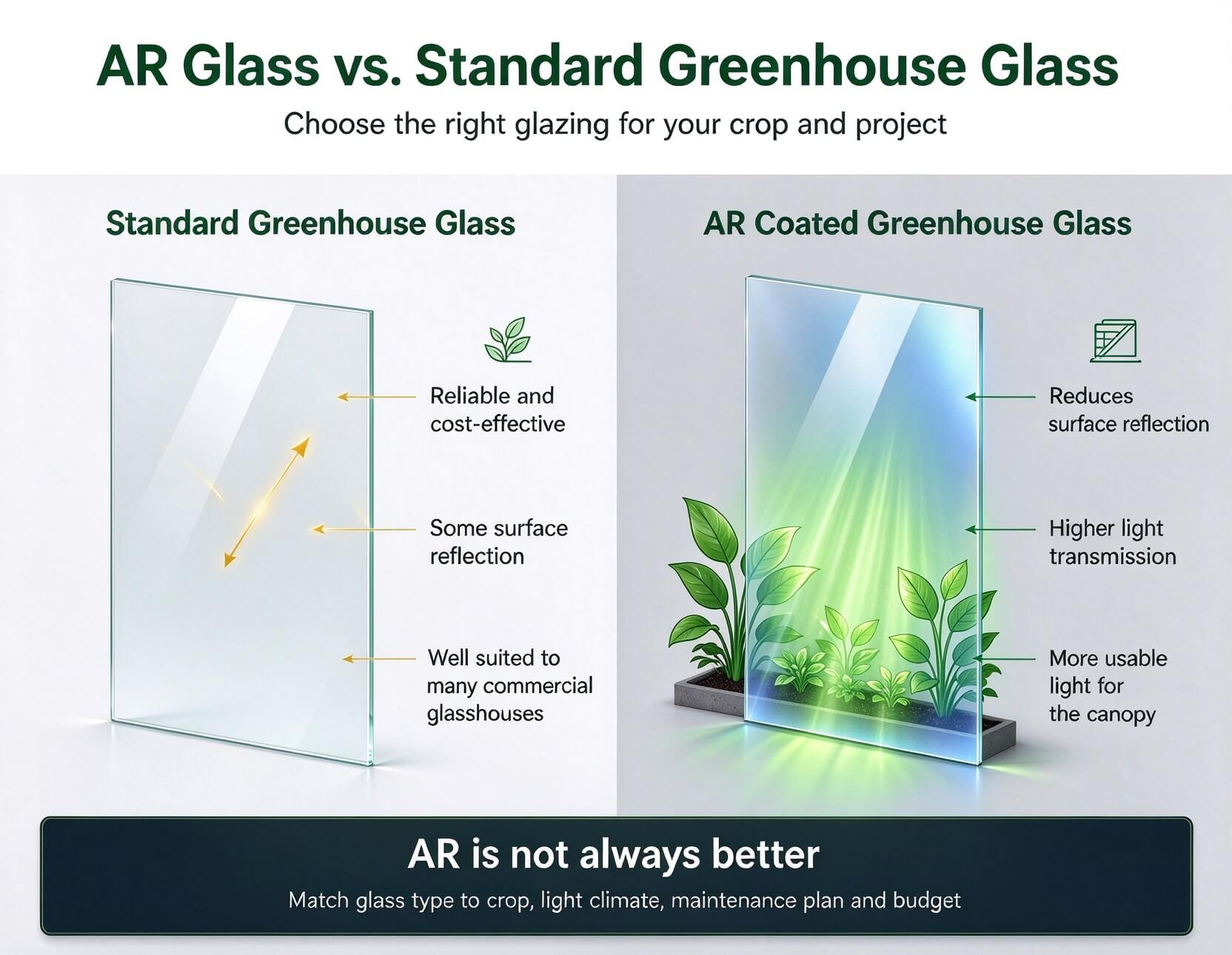
Standard greenhouse glass is the baseline glazing solution for commercial horticulture. Made from tempered low-iron glass, it delivers dependable light transmission and structural durability at a cost-effective price point. However, like all clear glass, it naturally reflects roughly 8–10% of incoming sunlight off its surface. This reflected light never reaches the plant canopy, which translates to a permanent loss of photosynthetically active radiation (PAR).
AR (anti-reflective) greenhouse glass features a specialized optical coating applied to the glass surface that drastically reduces surface reflection. Premium etched AR glass, such as Yuhua’s horticultural greenhouse glass solutions, cuts reflection down to just 2–3%, boosting total light transmittance to as high as 97.5%. Unlike standard glass, where light loss is fixed, AR coating recovers nearly all of the reflected sunlight and directs it into the greenhouse canopy.
Beyond raw light transmission, the two options differ in long-term performance and maintenance requirements. Standard glass requires no special care beyond routine cleaning, and its optical performance remains consistent over decades. AR coated glass delivers higher peak transmission, but its performance depends on coating integrity and regular cleaning to maintain maximum light gain. High-quality etched AR coatings offer far better durability than sol-gel alternatives, with performance that remains stable for years in harsh greenhouse environments.
The primary function of AR coating is to address surface light reflection, which creates three key pain points for commercial growers.
First, it recovers otherwise lost PAR light to unlock higher yield potential. For greenhouses in low-light regions or northern latitudes, even a 5–7% gain in usable light can translate directly into measurable crop yield increases. Research from Wageningen University & Research (WUR) confirms that improved light transmission from AR treatments directly supports higher production in tomato, cucumber and rose cultivation, with yield gains aligning closely with increases in available PAR light. This makes AR coating a strong return on investment in areas with limited sunlight.
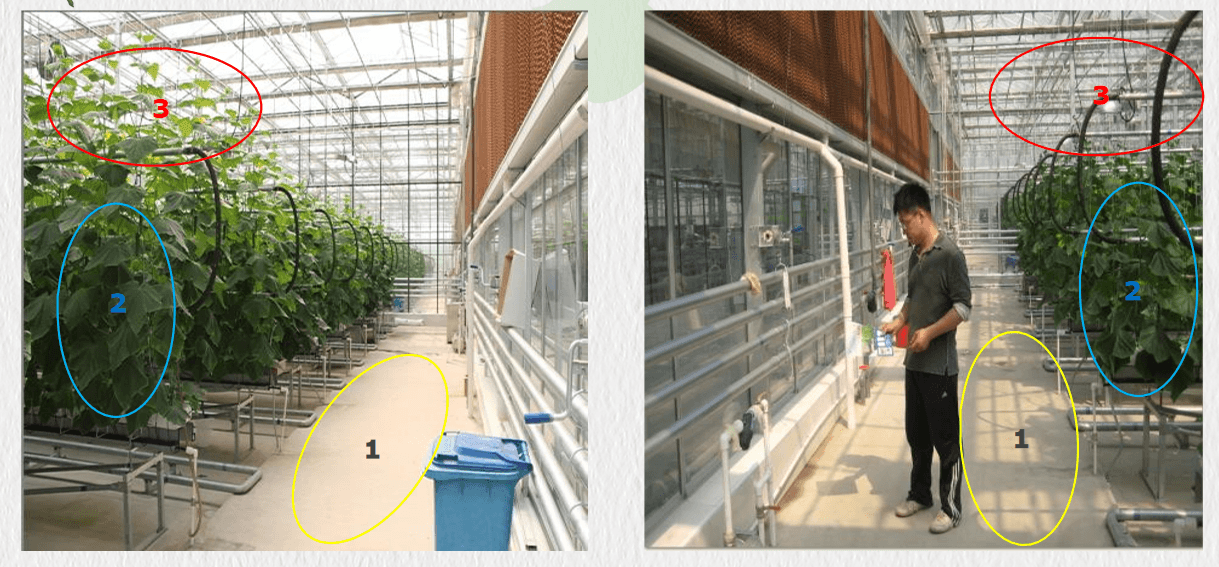
Second, it improves light uniformity across the crop canopy. Reduced surface reflection means more even light penetration, minimizing shadow gaps and supporting more consistent growth from upper to lower foliage. This is especially valuable for tall, dense crops where lower leaves often suffer from insufficient light under standard glass.
Third, it reduces glare and the risk of heat hotspots. By diffusing reflected light rather than allowing it to form intense focal points, AR coating helps create a more uniform internal greenhouse climate, reducing heat stress on sensitive crop foliage.
Despite its clear light transmission advantages, AR glass is not automatically the right choice for every greenhouse project. There are key factors that make standard glass the more practical option in many scenarios.
Most notably, AR coated glass carries a higher upfront cost than standard greenhouse glass. For operations running on tight budgets, or for crops with relatively low light requirements, the additional yield gain may not justify the extra initial investment.
Maintenance is another factor to weigh. While premium etched AR coatings are highly durable, they still require regular cleaning to preserve peak light transmission. Dust, dirt, and mineral deposits can reduce the coating’s anti-reflective performance over time. For greenhouses in high-dust regions or operations with limited maintenance capacity, standard glass may deliver more consistent long-term performance with less upkeep.
Additionally, in regions with very high natural sunlight intensity, the extra light from AR coating may exceed crop requirements and even cause light stress or sunscald. For light-tolerant crops grown in sunny climates, standard glass often provides more than sufficient PAR for optimal growth.
The optimal glazing choice depends on four core factors:
In the AR glass vs. standard greenhouse glass debate, there is no one-size-fits-all answer. Standard glass remains a reliable, cost-effective choice for most commercial growing operations, while AR coated glass delivers measurable light and yield benefits for specific crops and growing conditions. The best approach is to match your glazing specification to your crop needs, growing environment, and business goals, rather than defaulting to the highest-spec option.
Premium etched AR coatings last significantly longer than sol-gel alternatives. In commercial greenhouse conditions, etched AR glass maintains stable optical performance for 15–20 years with proper maintenance, compared to 10–15 years for typical sol-gel coatings. Performance degradation is gradual and mostly tied to surface contamination rather than coating failure.
Yes, AR coating and diffuse greenhouse glass are regularly combined for commercial greenhouses. This dual-treatment design delivers both reduced surface reflection and uniform light scattering, maximizing deep canopy light penetration while minimizing shadows. It is a popular specification for high-wire vegetable and cut flower production systems.
No. The return on AR coating depends on how much the extra light translates into higher crop value. It delivers the strongest returns for high-value, light-hungry crops in low-light regions. For lower-value crops, high-sunlight locations, or budget-constrained projects, standard greenhouse glass often delivers better overall value.
Rinse with clean water and use a soft, non-abrasive cloth or sponge for routine cleaning. Avoid harsh chemicals, abrasive scrubbers and high-pressure washing directly on the coated surface. Regular cleaning prevents mineral and dust buildup that would reduce anti-reflective performance over time.
For help selecting the right glazing for your commercial greenhouse project, our team can provide tailored recommendations based on your crop type, location, and production targets.
