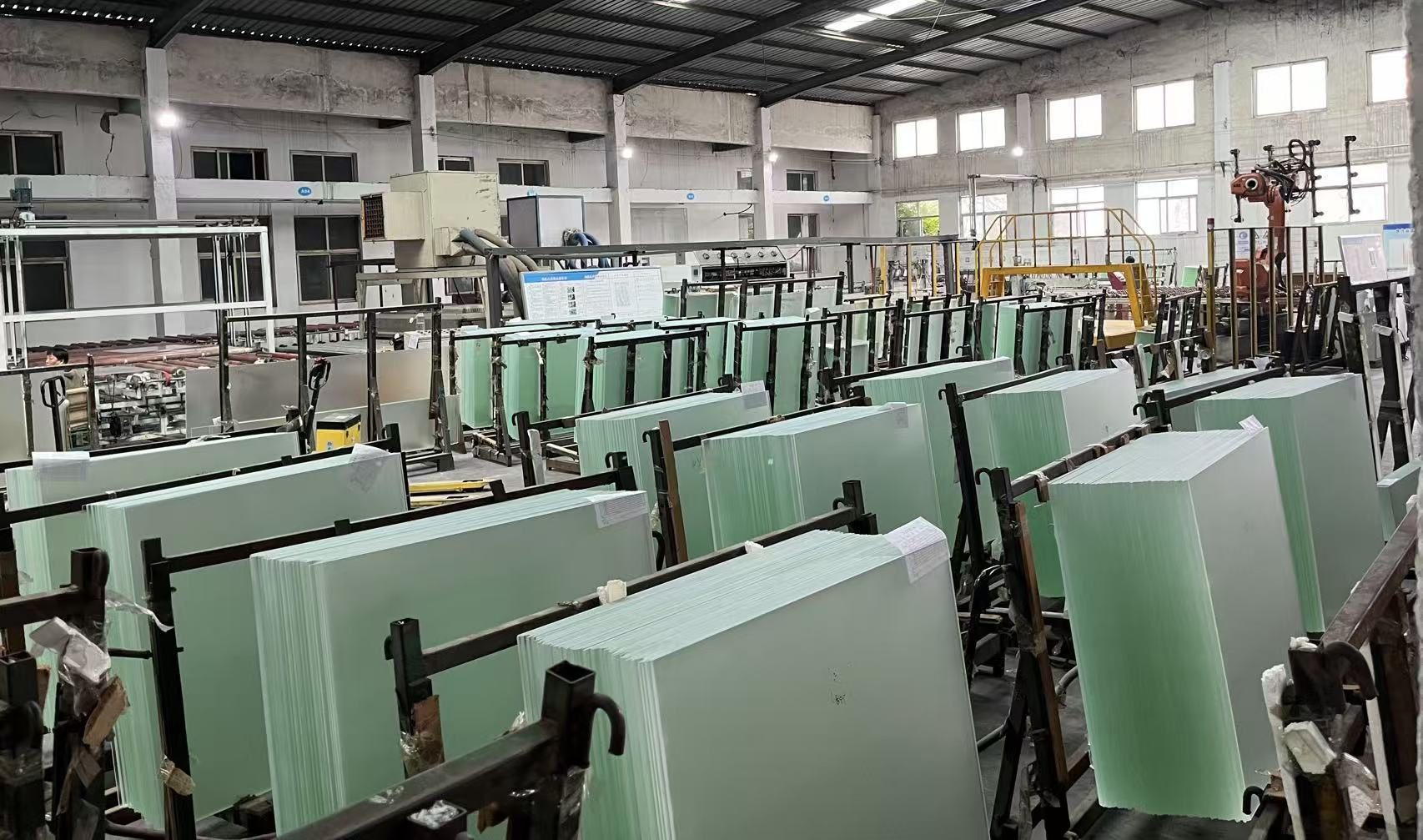
Modern greenhouse cultivation, including film, solar, and glass greenhouses, increasingly prioritizes diffuse scattering covering materials to optimize indoor light environments.Unlike traditional transparent coverings that produce harsh direct sunlight, diffuse reflection materials evenly scatter solar radiation to create soft, full-canopy lighting. As a reliable horticultural covering solution, Yuhua greenhouse diffuse reflection glass effectively eliminates light hotspots while maintaining high light transmittance, solving core pain points such as crop light burn and unbalanced canopy lighting that plague traditional greenhouse materials. To understand its advantages, it is essential to clarify the optical principle of diffuse reflection. Ordinary glass produces specular reflection, where light travels in a fixed direction with equal incident and reflection angles, resulting in concentrated high-intensity light. In comparison, diffuse light forms through repeated refraction, absorption, and scattering on the microcrystalline surface of professional scattering glass. Verified by in-depth research from Wageningen University, a leading global horticultural institution, this optical mode achieves zero light loss and uniform three-dimensional light distribution inside greenhouses, creating a more stable growth environment for crops. Diffuse reflectance spectroscopy analysis further explains the uniqueness of such glass materials. Different from UV-visible transmission detection suitable only for liquid samples, diffuse reflection testing adapts to all solid greenhouse covering...